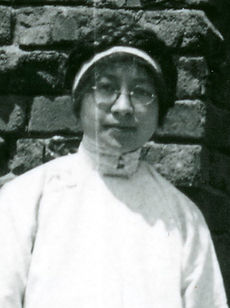
Tye Leung Schulze
Photo provided by https://en.wikipedia.org/wiki/Tye_Leung_Schulze
Her
Story
Chinese people are often overlooked in the history of the American West with the exception of the building of the transcontinental railroad. By only focusing on one aspect of Chinese life in the United States, Chinese communities and their impact are largely diminished from the historical narrative, particularly in the West. This removal allows for erasure of the public and political treatment towards Chinese communities in the nineteenth and twentieth centuries, lending itself to erasure today. Tye Leung Schulze's life exemplifies overcoming discrimination and racism to accomplish great feats to be mainly removed from the history of the West today.
Anti-Chinese Rhetoric
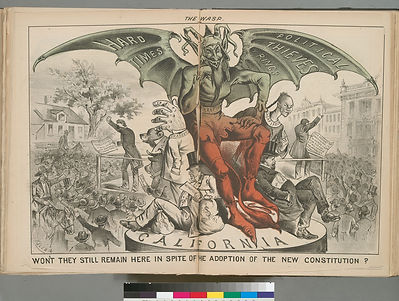

"California developed its own system for administering and regulating immigration. In 1870 the state legislature passed a racially specific antiprostitution law that banned the entry of "Mongolian, Chinese and Japanese females" who were not "of correct habits and good character." (Sears, Arresting Dress, 123).
"the coming of Chinese laborers to the United States be, and the same is hereby, suspended; and during such suspension it shall not be lawful for any Chinese laborer to come, or having so come after the expiration of said ninety days to remain within the United States" (Chinese Exclusion Act, 1882, provided by the National Archives).
Tye Leung Schulze's Life & Achievements
"My first vote? - Oh, yes, I thought long over that. I studied; I read about all your men who wished to be president. I learned about the new laws. I wanted to KNOW what was right, not to act blindly" -Tye Leung Schulze
Her Life
At a young age, Tye Leung ran away from home to escape from an arranged marriage, finding respite within a Presbyterian mission house. There, she was mentored by Donaldina Cameron, a teacher at the mission house who fiercely advocated for women. Tye Leung began assisting Cameron in freeing women from sex slavery and acted as a translator for Chinese women sold into sex slavery. Her activism continued and she began working at Angel Island Immigration Station as a translator for Chinese women seeking entry into the United States. There she met Charles Schulze and the two fell in love. However, their interracial marriage caused both of them to lose their government jobs. Tye Leung Schulze found work with the Pacific Telephone and Telegraph Company. Although no longer employed as a translator, she continued to assist her community by translating for them when requested. In 1912, she cast her vote in the Presidential Election, the first Chinese woman to do so. For the remainder of her life she continued to advocate for women. At 61, she was arrested for helping women get medical assistance (the charges were dropped).
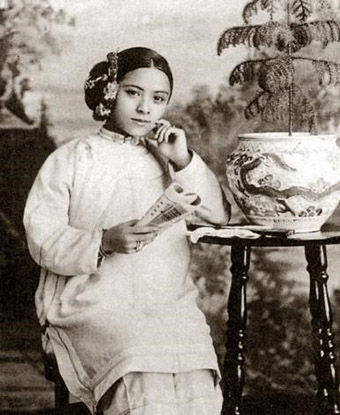
Photo courtesy of https://www.nps.gov/people/tye-leung-schulze.htm
Major Achievements
-
First Chinese woman to vote in a federal election
-
Possibly the first Chinese woman to vote in general
-
First Chinese woman to be employed by the Federal Government